
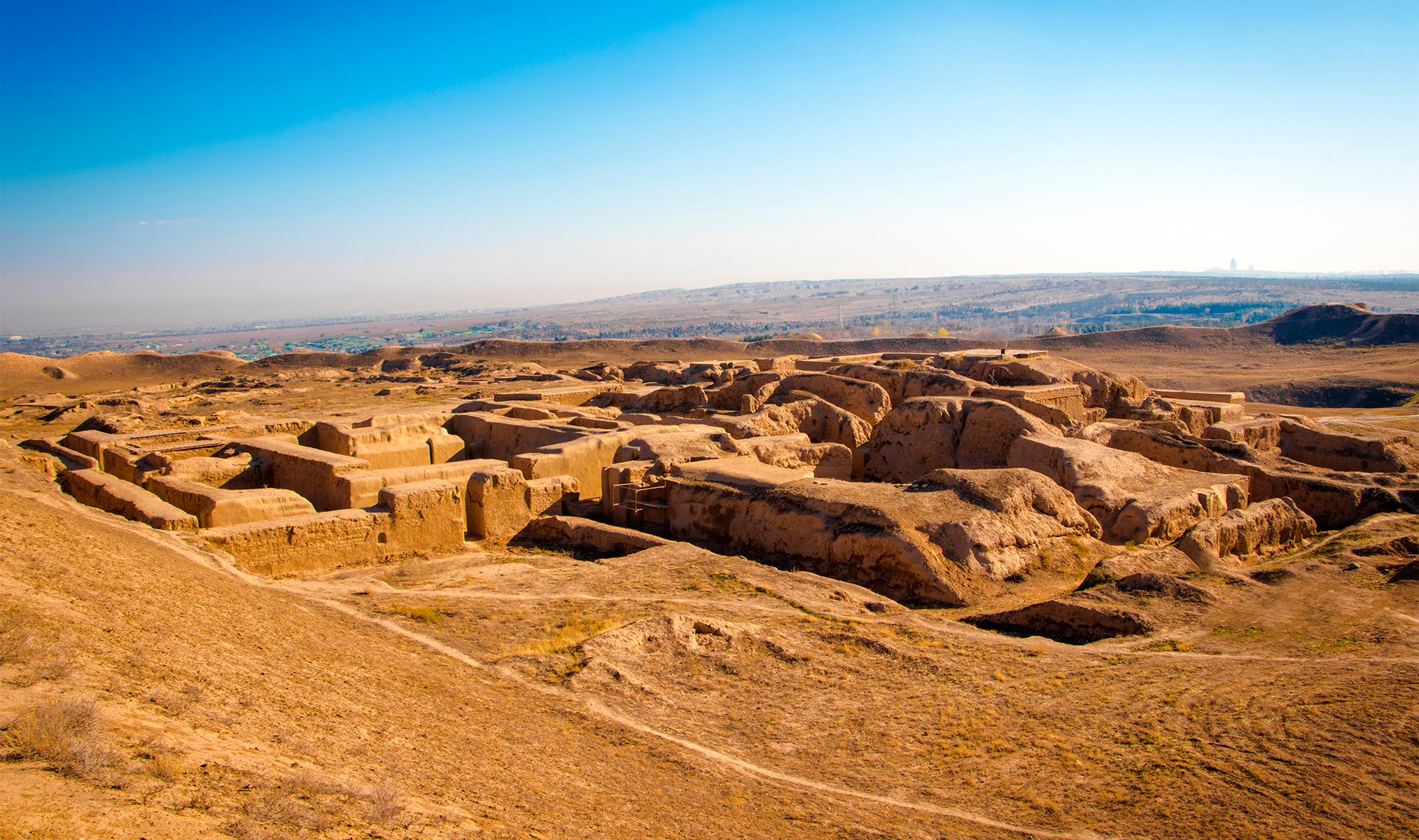
Ancient Nisa
Nisa is an ancient city located about 15 kilometers west of Ashgabat. Today, only ruins and traces of fortress walls remain, but 2,000 years ago, it was one of the most important centers of civilization in Central Asia and even served as the capital of the Parthian Empire for a time.
The name Nisa refers to two fortress-cities situated 1.5 kilometers apart: Old Nisa and New Nisa. The fortress walls of Old Nisa are 9 meters high and 1,500 meters long, with 43 towers and a bastion.
Archaeological Structures
Within the fortress, archaeologists have identified structures known as:
- Square House - Built in Hellenistic style
- Square Hall - Features massive column support
- Round Temple - Zoroastrian religious site
- Red Building - Decorated with frescoes
These were built in Hellenistic style with local cultural elements. Interior walls were decorated with frescoes, and ceilings were supported by massive columns. Although the architecture bore similarities to ancient Greek traditions, Old Nisa was also home to Zoroastrian temples.
Famous Artifacts
Excavations have uncovered numerous artifacts, the most famous being the statue of Rodogune and ivory rhytons (drinking vessels) with exquisite carvings. These findings are displayed in the State Museum of Turkmenistan in Ashgabat.
In 2007, this remarkable monument of antiquity was inscribed on the UNESCO World Heritage List.
Location
15 km west of Ashgabat, Turkmenistan
Built
Established over 2,000 years ago