
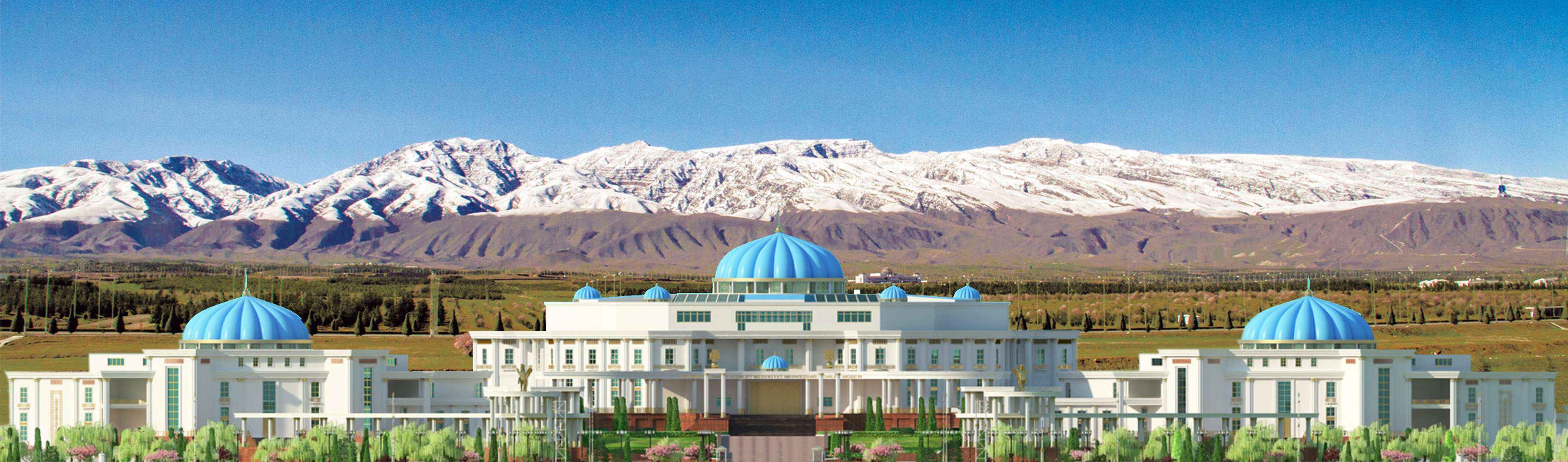
State Museum of the State Cultural Centre
On January 5, 1998, according to Presidential Decree No. 3479, the former Museum of History and Ethnography of Turkmenistan was merged with the Museum of Fine Arts of Turkmenistan, forming the National Museum of Turkmenistan. The ceremonial opening took place on November 12, 1998.
Under Presidential Decree No. 8270 of February 21, 2007, construction began on two new buildings: the Museum of the President and the Museum of Ethnography. On April 25, 2013, by Presidential Decree No. 12981, it was renamed the State Museum of the State Cultural Centre of Turkmenistan.
The total area of the museum is 165,323.21 m². On the first floor of the main building are the Independence Hall, the Turkmen Carpet Hall, and the Temporary Exhibitions Hall. On the second floor are the Departments of Ancient History, Margiana, Parthia, and two Medieval History halls.
Ancient History Department
The Ancient History Department shows the history of humanity on the territory of Turkmenistan in the paleolithic, mesolithic, neolithic and eneolithic eras through dioramas, photographs, information and archaeological findings. It presents the caves of Dam-dam Chesme and Jebel, the Jeitun culture, and the city of Altyndepe.
Margiana Section
The section devoted to Margush state shows findings from Gonurdepe, indicating that the inhabitants of that era were among the first to domesticate horses. Their jewelry and items masterfully made from stone, marble, bronze, silver, and ceramics are on display.
Parthia Hall
The Parthia Hall comprises a complex of findings discovered in the Old and New Nisa fortresses, considered the birthplace of the Parthian state, one of the most powerful states of antiquity in Southern Turkmenistan.
Medieval History
The Medieval History sections showcase early medieval history (5th-9th centuries), developed medieval period (9th-12th centuries), and late medieval history (12th-16th centuries) through archaeological findings, reconstructions, dioramas, photographs and official information. Historical findings about states created by Turkmens in the Middle Ages, models of monuments of Merv, Kunya-Urgench, Anau, samples of luster ceramics, and various bronze vessels are the reason for increased interest in the museum.
Location
Ashgabat, Turkmenistan
Opening Hours
9:00 AM - 6:00 PM
Ticket Price
Contact museum for current rates